C
Charlie Kirk spent years in the public eye. He debated college students, hosted a daily podcast, and built Turning Point USA into one of the largest conservative youth groups in the country.
Along the way, he said things that lit up the internet — and split opinion right down the middle. This guide walks through the Charlie Kirk worst quotes people bring up most, why each one caused a stir, and how both critics and supporters have responded.
Table of Contents
Who Was Charlie Kirk? Background Behind the Controversial Quotes
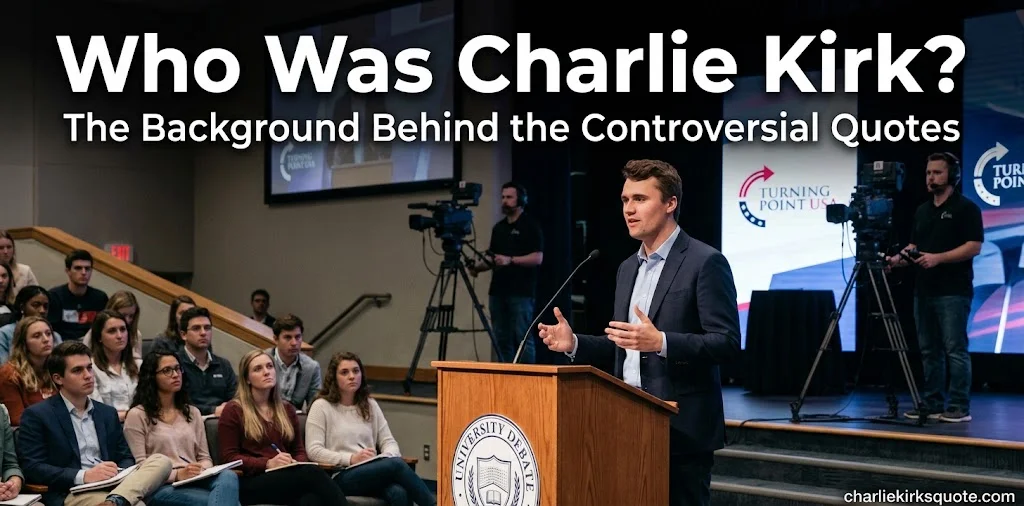
Charlie Kirk co-founded Turning Point USA in 2012, at age 18. The group grew into a major force on U.S. college campuses, known for its “Prove Me Wrong” tables and viral debate videos.
Kirk built his following on confrontation. He’d sit across from a student, argue a hot-button issue on camera, and let the clip do the rest. That format is exactly why so many Charlie Kirk controversial quotes ended up going viral — they were designed to be clipped, shared, and argued over.
He was also a close ally of Donald Trump and helped mobilize young voters for Trump’s campaigns. Kirk was fatally shot on September 10, 2025, while speaking at Utah Valley University. His death triggered a fresh wave of interest in both his legacy and his most contested remarks.
25 of Charlie Kirk’s Most Controversial Quotes and Statements
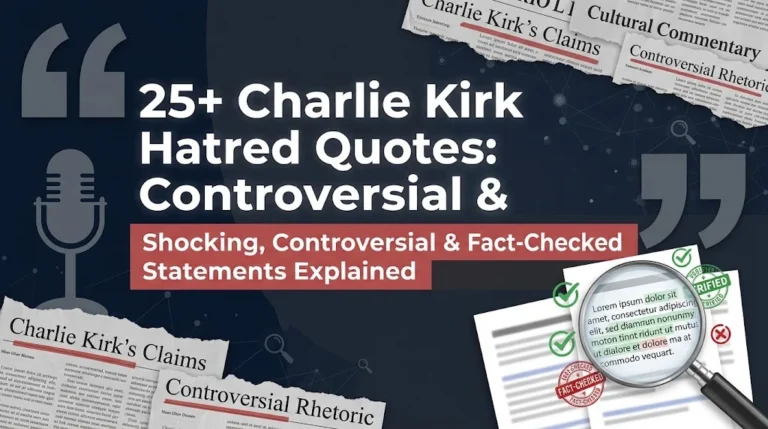
Below are 25 statements that have been widely circulated, debated, and fact-checked. Each one is summarized in plain terms, with the topic and rough timeframe noted.
- Stoning and “God’s perfect law.” On his podcast in 2024, Kirk referenced an Old Testament stoning verse and called it God’s “perfect law” for sexual matters — a comment that drew comparisons to biblical law being applied to modern LGBTQ+ rights.
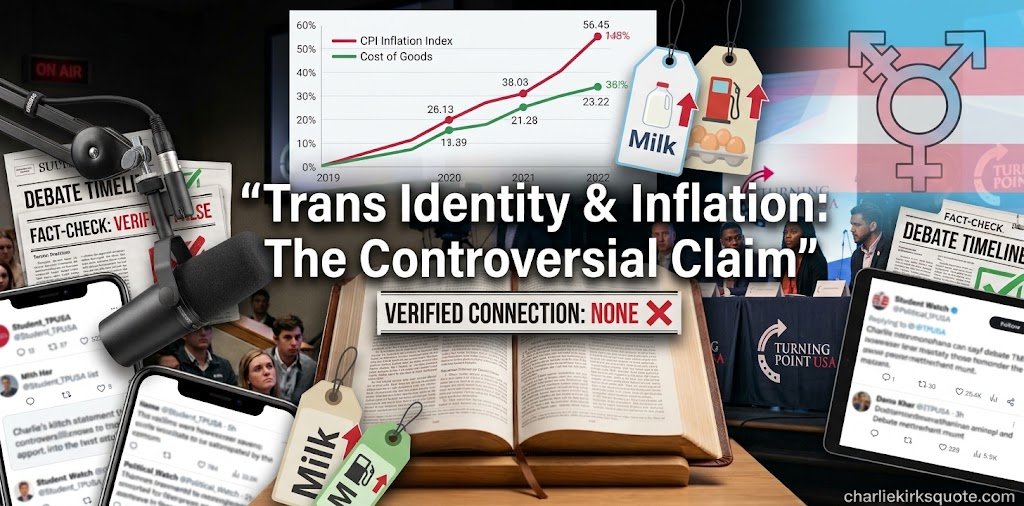
- Trans people and inflation. In 2022, Kirk argued there was a “direct connection” between rising inflation and acceptance of transgender identity, though he offered no economic data to back the claim.
- Overturning hate crime convictions. Kirk said it should be legal to burn a Pride flag in public and called for overturning convictions tied to people who vandalized Pride-flag street murals.
- “Just took care of” comment. Speaking with former college swimmer Riley Gaines, Kirk said earlier generations would have “just took care of” the trans-rights debate the way things were handled in the 1950s and ’60s — a remark widely read as an endorsement of past forced institutionalization.
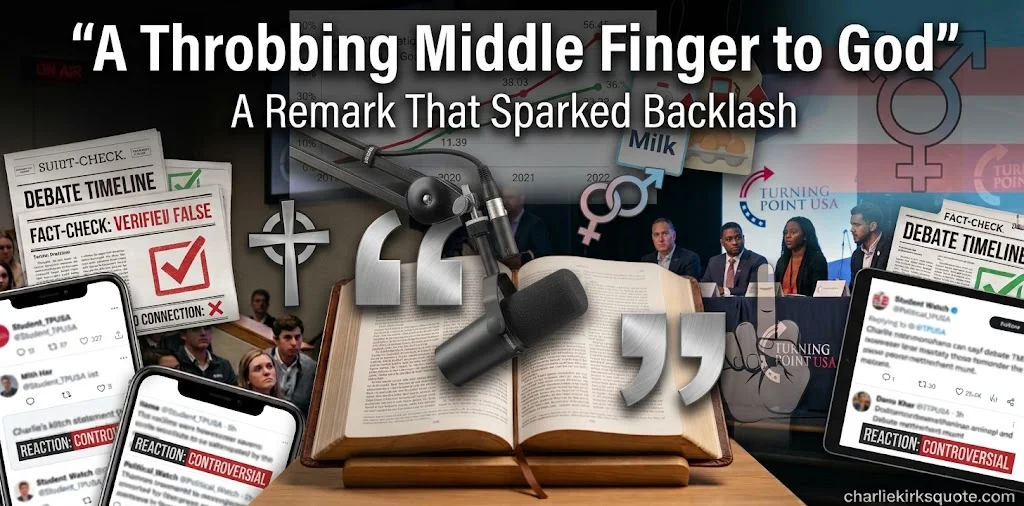
- “Throbbing middle finger to God.” In a 2023 speech, Kirk described transgender identity this way and directly addressed swimmer Lia Thomas, calling her an “abomination.”
- “Nuremberg-style trial” for doctors. Kirk said in 2024 that physicians who provide gender-affirming care should face war-crimes-style trials, comparing them to Nazi doctors.
- Trans identity as “social contagion.” Kirk said he would not affirm a child who came out as trans or gay, calling the trend a “social contagion” tied to autism and anxiety.
- “Alphabet mafia” remark. At a 2022 campus speech, Kirk referred to the LGBTQ+ community as a “hypervocal minority” and used the term “alphabet mafia” to describe ongoing demands for inclusion.
- Transhumanism claim. Kirk linked the “transgender movement” to a broader effort to merge humans with machines, tying it to Silicon Valley and the metaverse.
- “Child mutilation” tweet. In a 2023 post, Kirk called gender-affirming care “child mutilation” and made additional claims about minor-attracted people that medical groups have widely rejected.
- Jan. 6 remark. Kirk suggested Capitol riot defendants would have gotten lighter sentences if they had filmed themselves having gay sex inside the building, referencing a separate, unrelated leaked video.
- Imane Khelif comments. During the 2024 Olympics, Kirk called boxer Imane Khelif’s participation “pure evil” and repeated unverified claims about her gender, despite no public confirmation of any failed eligibility test.
- Blaming trans people for mass shootings. After a 2025 shooting where the suspect reportedly identified as trans, Kirk blamed the “trans medical industry” broadly, despite data showing the overwhelming majority of mass shooters are cisgender men.
- Gun deaths are “worth it.” At a 2023 event, Kirk said the country would never get gun deaths to zero, but argued the tradeoff was “worth it” to preserve the Second Amendment.
- Comment on empathy. Kirk said he “can’t stand the word empathy,” calling it a “made-up, new age term” he believed causes harm.
- 1940s crime-rate comment. In a campus debate, Kirk claimed crime was lower in the 1940s, prompting a student to push back by citing thousands of documented lynchings during that era.
- “Black pilots” and DEI. Kirk questioned diversity hiring practices in aviation, framing it as a critique of DEI policy rather than pilot competence — a distinction that didn’t stop the remark from being widely criticized as racially charged.
- Homelessness “by choice.” Kirk said in 2024 that most homeless people were on the street due to drugs, mental illness, or personal choice, a framing public-health researchers say oversimplifies the causes of homelessness.
- No abortion exceptions for rape. Kirk opposed abortion even in cases of rape, a position he defended repeatedly in campus debates.
- Birth control and “bitterness for stuff.” Kirk argued birth control helped create a Democratic voting bloc built on what he called a trade of “bitterness for stuff.”
- Target “grooming” accusation. Kirk accused Target of grooming children over its Pride Month merchandise line, a claim the retailer never substantiated.
- Retirement “isn’t biblical.” Kirk said he wasn’t a fan of retirement, calling it a waste of “the gifts that God has given you” and pushing to raise the retirement age for younger workers.
- Ms. Rachel Bible dispute. After children’s show host Ms. Rachel voiced Pride Month support, Kirk cited Leviticus to argue against affirming LGBTQ+ identities — but combined two separate Bible verses in the process.
- “Woman face” comparison. Kirk compared a trans woman’s gender identity to wearing blackface, calling it an assumed identity that “isn’t yours.”
- Opposition to same-sex marriage. Kirk consistently opposed same-sex marriage throughout his career, describing LGBTQ+ rights expansion as part of a broader “homosexual agenda.”
These 25 moments span nearly every hot-button issue in American politics — *gender identity, **guns, **race, **immigration policy debates, and *religion. That range is exactly why Kirk’s name kept resurfacing in news cycles, long before his death made the list newly relevant.
Must Visit: Charlie Kirk Quotes About George Floyd: 7 Controversial Statements That Sparked Debate & Outrage
Context and Reactions: How Critics and Defenders Interpret These Quotes
Not everyone reads these statements the same way, and it’s worth laying out both sides honestly.
*Critics, including LGBTQ+ advocacy outlets, describe these quotes as part of a consistent pattern — one that spread misinformation about *gender-affirming care and normalized hostility toward transgender people. Medical groups like the American Medical Association and the American Academy of Pediatrics have pushed back directly on several of Kirk’s specific claims, particularly around gender-affirming care and detransition rates.
*Defenders, including Christian commentators, argue the “worst quotes” framing strips context from Kirk’s remarks. One widely cited analysis from theologian Thaddeus Williams reviewed 100 video clips selected by people who opposed Kirk and found he directly used insulting language in only 11 of them — three of which were Kirk criticizing *himself as “a sinner.” Williams argues this shows a debater who rarely returned insults, even when called names dozens of times by opponents.
Both things can be true at once: some quotes are accurately reported and genuinely controversial on their face, while others depend heavily on which clip, which sentence, or which follow-up question got included. Readers weighing this topic should look at full video clips where possible, rather than single lines pulled out of a longer answer.
How Kirk’s Controversial Statements Shaped Public Debate
Kirk’s debate style turned campus arguments into a media product. Every clip became shareable content, which meant his most provocative lines traveled far faster than his longer, more nuanced answers.
That format changed how younger Americans encountered political debate — for better or worse. Supporters credit it with getting young people engaged in politics at all. Critics argue it rewarded shock value over substance.
After his death, interest in these quotes spiked again, driven by two very different motives: some readers want to understand why he drew so much criticism, while others want to see his statements read in full, unedited context. Both searches point back to the same list of moments.
FAQs
What is Charlie Kirk most known for saying?
Kirk is most associated with his comments on transgender issues, including calling transgender identity a “social contagion” and comparing gender-affirming care doctors to war criminals. His remark that gun deaths are “worth it” for Second Amendment rights is also widely cited.
Were Charlie Kirk’s quotes taken out of context?
It depends on the quote. Some, like the “alphabet mafia” remark, are accurately transcribed from full clips. Others have been shortened in ways that critics and supporters disagree about — which is why checking the original video source matters.
Did Charlie Kirk ever apologize for his statements?
Kirk rarely walked back his comments publicly. He generally stood by his positions, framing them as honest arguments rather than statements requiring apology.
Where can I verify these quotes are accurate?
Most of these statements circulated on video, through Kirk’s own podcast, tweets, or recorded campus debates. Outlets across the political spectrum, from LGBTQ+ advocacy sites to Christian commentary sites, have separately transcribed and reviewed the same clips.
Why are people searching for these quotes now?
Interest spiked sharply after Kirk’s death in September 2025, as his legacy became a subject of national debate in Congress, on social media, and across news outlets.
Conclusion
Charlie Kirk‘s public record includes dozens of statements that drew real backlash, alongside a debate over whether some of those statements are being read fairly. Both halves of that story matter. Understanding his most controversial quotes means looking at what he said, when he said it, and how much context surrounds each clip — not just the headline version.

Asif Abroy is a writer and quote enthusiast dedicated to collecting, organizing, and sharing meaningful words that inspire thought and conversation. Through his work, he explores memorable quotes across topics such as leadership, freedom, faith, education, motivation, culture, and everyday life.